If you have been toying with the idea of taking a mental health first aid course, I urge you to take the leap and do one! As the wellbeing champion for my practice, the course was put on by and paid for by the corporate who owns the practice. But there are plenty of other options out there.
So as far as finding one it was very easy but for those in independent practices who would like to do one – Mind Matters is collaborating with Mental Health First Aid (MHFA) England to deliver a free, online training programme for rural and ambulatory vets, with a goal to creating a network of Mental Health First Aiders in isolated jobs across the UK. Go check it out and get involved!
If each practice is required to have a trained first aider, why shouldn’t we have a mental health first aiders as well?!

So let’s jump right into it! 5 main takeaways I learnt from my mental health first aid course:
#1
Experiencing poor mental health is much more common than you think, and if you aren’t in the best mental health place – you are absolutely not alone! It is estimated 1 in 6 people in the past week experienced a common mental health problem. Not only that, but only 13% of people report to be living with good mental health… shocked? I was… but at the same time it reinforced how many people are going through the same thing when I’m feeling low or anxious. And maybe that might help put things in perspective for you too?
#2
There are huge gender differences when it comes to mental health. Some of you might have already seen the statistic but suicide is the biggest killer of men under 50 years old. The rate of suicide in women is a third of men’s in the UK. Not only that but men are 3 times more likely to become alcohol dependent.
Compare that with the fact that women are twice as likely to be diagnosed with anxiety or depression as men. Does that mean they are more commonly affected? Or does this just mean that they are more likely to come forward and discuss their mental health with their GP?
#3
Rather than good or poor mental health, it’s better to look at it as a ‘mental health continuum’.
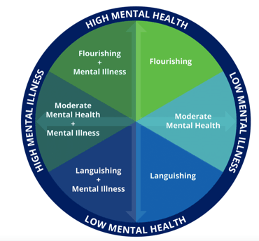
The mental health continuum allows you to describe your mental health more accurately. Not all mental illnesses will be cured or will you recover from forever! And as you can see from the diagram, having a mental illness doesn’t define how high or low your mental health is – you can be living with a mental illness and flourishing, i.e. you might be taking medication, you attend talking therapy, you recognise triggers and know how to deal with them before they become issues.
Where would you place yourself on the wheel?
#4
You don’t have to diagnose people if you’re a mental health first aider! That’s a trained medical professional’s job. And sure, as vets it’s what we love to do… But as a MHFA, you’re only there to recognise someone who might be struggling and provide confidential support, be open and ready to talk, and to signpost them to further help if they need it.
Further help might be a counsellor, the free VetLife helpline, the Samaritans, or their GP.

#5
As much as the planned content on the course was really interesting and useful, I probably learnt the most from the other group members on the course with me. Everyone was incredibly open about their own mental health journeys and struggles.
You by no means have to have perfect mental health to be a first aider – a totally unrealistic expectation of anyone! And talking about how they related to certain conditions or scenarios because of their own experiences or experiences of loved ones created this amazing psychologically safe environment for everyone to delve deeper and learn so much from.
Conclusion
It was a really interesting day with some inspirational people. I got some excellent ideas for how to provide support for my colleagues in practice and how to signpost amazing resources without being pushy or offensive. At times, the going was pretty emotionally demanding when we were discussing some really difficult scenarios but the group filled me with hope that veterinary can be better with mental health!
I’m more than happy to answer any questions you might have – easiest place to reach me is via DM on @thisvetcan_blog.
 ThisVetCan